A lot of people, including myself, like to declare themselves “avid” readers. Truthfully I always feel like I fall short of that mark. When I’m sitting at home, it isn’t usually a book I grab when streaming television and video games are within reach. But I do love a good book.
Goodreads said that I read 25 books this year, but this is a lie. I didn’t input every book I read, and most of those books are audiobooks. A few of these are rereads. There are some books I started reading and didn’t see to the end. All in all, I estimate 31 books for the year, read, and listened to.
Here’s the breakdown by Genre:

It doesn’t seem prudent to do a “top 5” of these books because there isn’t much binding them other than me reading them. Instead of that, I’ll just list the ones I feel like talking about and why:
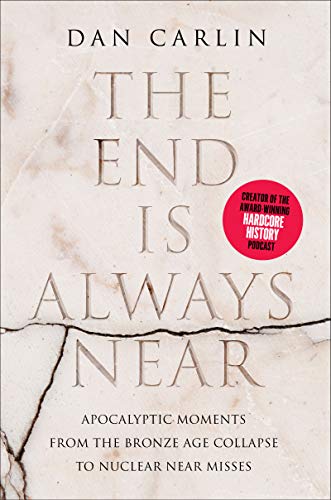
The End is Always Near (Dan Carlin) is the most fitting book for 2020 (Even though it released in 2019)
Dan Carlin is a former journalist who hosts the podcast Hardcore History, which is why I’ve had a resurgent interest in history in my adult life. Right before the year 2020 began, Dan Carlin published a The End is Always Near, a book that summarizes some of his more doom-laden podcast series. This book is a great way to become familiar with Dan Carlin’s style, especially if you opt for the audiobook format.
You will learn about the Bronze Age Collapse, the conquests of barbarians, nuclear weapons, and pandemics. Ironically, he describes the modern age as being distinct from the past due to our lack of fear of dying from a deadly disease. I only wonder how some of these lines might have been different if he had waited a few months before publishing the book. However, a quote does seem to be prophetic:
“it’s never wise to bet against any of the four horsemen long term. Their historical track record is horrifyingly good.”
Everyone should get this book, but you need to listen to the audio format if you want the real effect. Dan Carlin is “not a historian, but a fan of history,” as he often puts it. I’d describe him as a great storyteller. If you want a good sense of his style, this would be a great place to start.
Why you should read it: You want to contextualize the year of 2020 within the broader terrors of history.
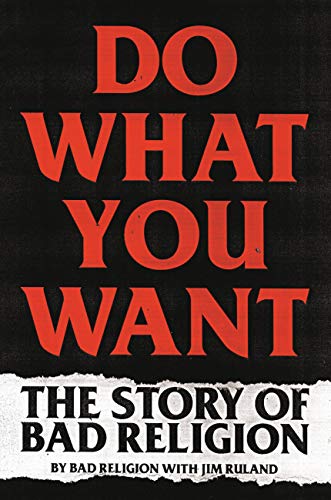
Do what you want: The story of Bad Religion (Bad Religion with Jim Ruiland) is an unconventional story of an intellectualist rock band.
I can recall the young punk rockers that formed a specific subculture within my high school. For them, it was about credibility and authenticity. Minor Threat, Bad Brains, Black Flag; if you didn’t listen to them, you weren’t a punk rocker. As a fan of Bad Religion, I found it hard to find a foothold with the rest of them.
Reading through their publicized story, I found a source of comfort. The young punks struggled with the same identity crisis. Unlike their early 80’s LA punk rock contemporaries, they came from the San Fernando Valley. They were not the urban hard-edged LA punks; they were from the middle-class suburbs. Their themes reflected this, and it fueled this.
Equal parts punkers and scholars, the likes of lead singer Greg Graffin (later Ph.D.) and guitarist Brett Gurewitz (later Epitaph Records CEO) stood out from the rest. Yet, they still managed to Suffer through all of the problems that plague most rock bands. Members have found that they had No Control over substance abuse and domestic issues. All in all, they’ve had to chart their course Against the Grain of indie and mainstream bands, becoming one of the most influential and successful groups of the past 30+ years.
Why you should read it: You want to reconcile being a punk with a functional member of society.

Alexander the Great (by Philip Freeman) is a story for the ages.
I don’t know why, but it’s become my preference to listen to history on audiobook rather than any other genre. Maybe it’s because I already know the broad strokes and delve into books to fill out the minor details. Or perhaps it’s because hearing the story makes it come alive more than words on pages can.
I love the story of Alexander the Great. From Oliver Stone’s Alexander to Assassin’s Creed Origins, he seems to be a favorite of many historical storytellers. There are good reasons for this. Alexander is a young Macedonian prince for whom all the stars aligned for him to achieve greatness. Rather than coasting his way to success, he took his fortunes and multiplied them.
Before he was 32, he acquired an empire that spanned across three continents, from the Danube and Egypt in the west to modern-day Afghanistan and India in the east. There was drama, betrayal, and heartbreak. It’s a story of unrivaled ambition in the face of resistance from all fronts.
Why you should read it: You want to conquer the Achaemenid empire before you hit your 30s.

The Obstacle is the Way (Ryan Holiday) will ignite a passion for stoicism.
If you’re already sick of the “these trying times” discourse, I won’t continue it for the sake of prompting you to read a book. But, if you’re wondering how your trials shape up in defining yourself, you should investigate the philosophy of stoicism. I started, as many do, with Marcus Aurelius’s Meditations. At the same time, I find it a great book; it’s mostly a bunch of platitudes without a coherent narrative binding them.
The Obstacle is the Way is a distilled version of all of the tenets of the stoic philosophy, from Epictetus to Aurelius. Not only is it easier to digest, but it also connects the ancient philosophy to modern philanthropists and successful business people.
Core to the book’s philosophy is the notion of changing your view about the trials you will face in life. You can either let them ruin you or help you. In that, you’ll find true adaptability and will “flip obstacles on their head.”
Why you should read it: It’s short, and you’ll learn something valuable.

Zoey Punches the Future in the Dick (David Wong) is an insightful dystopian novel that doesn’t take itself too seriously.
I’ve already written a full review of this book, but I’d be remiss if I didn’t mention it in this list.
David Wong is one of my favorite authors, and his insightfulness shines in this book. He paints a world where capitalism has run amok, and the government has no real authority. The wealthy rule a Vegas-like city of depravity and opulence.
But rather than having the characters mope around about how horrible the world is before taking up the sword to take down the whole thing, the main character, Zoey, struggles with what the right thing to do is. It isn’t as simple as your typical “downtrodden rise up against the ruling class” story; the less fortunate are willing contributors to this unvirtuous world. It’s one of the best extrapolations of our modern era I can think of, painting a ludicrous world that is neither wholly good nor bad. Zoey has to make decisions within that framework.
Why you should read it: David Wong is a fantastic writer. It’s the second in the Zoey Ashe series, so you need to check out Futuristic Violence and Fancy Suits before you think to pick this one up.
 chemicalbernswrites